

Rectifying Sarah Rector, “The Richest Black Girl in America” and her family
By Diane Euston
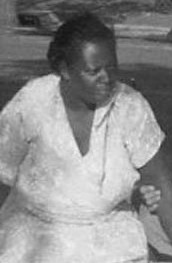
The two photos side-by-side, one of a child in a plaid dress and the other of a woman with her hair pulled simply back, have been timelessly interpreted to be “the richest black girl in America,” Sarah Rector – the very same Sarah Rector who lived out the majority of her life in Kansas City.
I have some important news to share with all of America: those images are not Sarah Rector.
Just over a century ago, headlines spilled across America and the world and are misrepresentations (along with the photos) of what really happened to Sarah Rector, her money and her family. The most important part of this saga is the simple fact that her family got lost within the tabloids– tabloids worldwide that painted a picture of a poor little black girl from Oklahoma who slept on dirt floors, struck it rich, was taken advantage of and lived frivolously.
Some of these statements are partially true, but the true story of Sarah should be told through her family.
I was lucky that a line of the Rectors – Sarah’s nieces- were willing to talk to me and share their stories.
Slavery Within the Creek Indians
Sarah’s luck hit in part because of her ancestry and the way in which land allotments for Native Americans- and their freedmen slaves- occurred in Oklahoma. Sarah’s paternal grandparents were likely born in slavery inside of the Creek tribe in eastern Alabama. The chief of the tribe, an Alabama-born man named Opothle Yohola (1778-1863), was one of these leaders who owned slaves. One of his slaves was Mollie, Sarah Rector’s great-grandmother.
Statehood and Land Allotments
Freedmen like Sarah’s relatives born into slavery were eligible for land allotments according to a treaty reached in 1866. Each freedman was given 160 acres of land. The Creek Freedmen settled in an area known as Blackjack near Muskogee, OK.
Joe Rector (b. 1878) met and married Rose Jackson (b. 1886), and by 1907, they were living in a two-room cabin outside of Taft, population 250, on Rose’s land allotment. They had three children: Becky (b. 1901), Sarah (b. 1902) and Joe, Jr. (b. 1906). At this time, the government was doling out the last of the Indian allotments before Oklahoma was admitted as a state.
By the time they had their chance to get a hold of land for their children, the pickings were slim. Becky’s land was in Okfuskee County, and Sarah and Joe, Jr. ended up with parcels 50 miles northwest of Taft. Sarah’s land was near a bend along the Cimarron River valued at around $500. At $3.50 an acre, she wasn’t shouting “I’m rich!” just yet.
Land also required payment of taxes per year. Not in a position to pay for all of the acreage, Joe was able to get rid of Becky’s land but was having trouble finding anyone to buy the rest.
By 1911, leasing land to oil-diggers presented a new opportunity for the Rector’s land. Joe ended up quite satisfied when he was able to lease Sarah’s land to an oil company where he received a bonus of $160.
A “Gusher” Changes Everything
In March, 1912, oil driller B.B. Jones started to assemble the necessary equipment to check out Sarah’s land near the Cimarron River. Any oil produced would give a 12.5 percent royalty to the land owner.
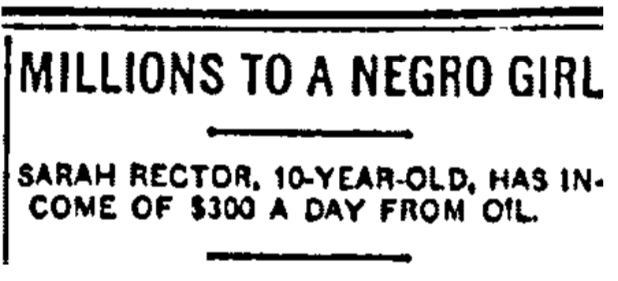
In late August 1913, B.B. Jones produced a “gusher” on the land. Quickly, this oil gusher produced 2,500 barrels of oil per day. Sarah’s cut per day was $300. By this point, Sarah was the second oldest of six children, her parents welcoming Alfred, Lillie and little Rosie by 1913.
Additionally, Joe and Rose now had a daughter who was transformed as a little black girl from Taft to a millionaire headline overnight. Headlines such as “Girl’s $112,000 a Year,” “Negro Girl Will Pay Largest Tax,” and “Negro Girl Rich From Oil- Has Income of $475 Daily – More Soon” sensationalized the story of a small girl and her family’s reality.
Rumors Circulate
Sarah and her siblings were perfectly content staying in Taft and living a somewhat normal life, but that didn’t seem to be the idea of those outsiders looking in.
Due to her newfound wealth, publications across America wrote of marriage proposals, especially those that came from four white men from Germany. “Evidently the color of an heiress does not matter if the color of her gold is genuine,” wrote Edward Curd, Sarah’s attorney. He also concluded that the men that wrote her were “fine looking chaps.”
By October 1913, 11-year-old Sarah received $11,567 in royalties from the gusher.
It was an article in a respectable black newspaper called the Chicago Defender that turned their worlds upside down. In November 1913, not aware of the monthly allotments Sarah was getting, the newspaper headline read “Richest Colored Girl Forced to Live in Shack.” Claims were made that Sarah was sleeping on the floor and her guardian was only giving her a few dollars a month. It went on to claim that her parents were “ignorant.”
The truth was that her parents were given money monthly to take care of her, and a new five-room home was being built on land purchased. She wasn’t sleeping on a dirt floor as had been reported, but the NAACP was more than concerned. Booker T. Washington even reportedly visited their home.
The NAACP was able to convince the Rectors to send Sarah to the Tuskegee Institute’s elementary school called the Children’s Home. Her mother insisted that older sister Becky go along to ensure her younger sister was tended to. Even after Sarah and Becky left for Alabama for better schooling, the newspapers reported that they were living in a tent.
The Move to Kansas City
By the time Sarah was 18, she was worth well over one million dollars. Likely in order to escape scrutiny and not wanting to be the target of some greedy party’s act, Sarah’s family secretly slipped away and moved north to Kansas City by 1917. “Mama Rose,” as her family called her, was in charge of Sarah’s money until she was able to get control at the age of 20.
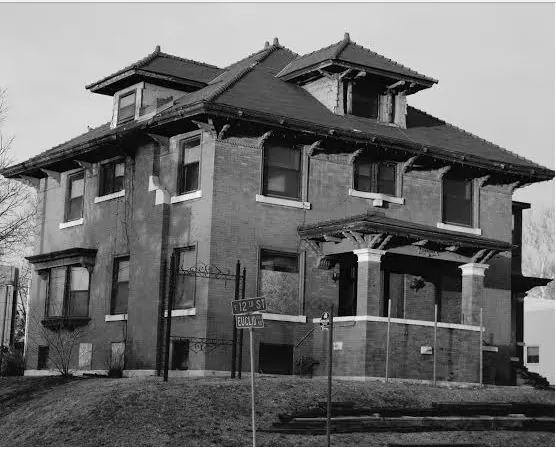
By 1920, the Rector family was living in a beautiful brick mansion at 2000 E. 12th St. that was purchased by Mama Rose for $20,000 from Henry S. Ferguson, president of the U.S. Water & Steam Supply Company. He had lived in the home for over 17 years. Today, people refer to the house inaccurately as the “Sarah Rector Mansion” when the truth is her mother purchased it and her whole family lived there.
The entire frontage of 12th St. from Euclid to Garfield was bought by Rector money and rented out to people for additional income. The family resided in this home until shortly after the Stock Market Crash where it was then purchased by the Adkins Funeral Home.
The Tragic Death of Joe
Joe wasn’t in the best of health, but when a friend from back home named Jim Manuel was serving time in the penitentiary, he contacted Joe and claimed to have property in Mexico that had been found to have oil on it. In order for Jim to show Joe where the alleged $40 million oil gusher was in Mexico, he had to be free. In turn, Joe was able to talk his wife (allegedly) into paying his $8,000 bond plus $2,000 in expenses to go to Tampico, Mexico and get his half.
Manuel and Joe arrived in Mexico on Joe’s dollar but all the money evaporated while trying to target this land in Tampico. Not too long afterward, Manuel disappeared into the sunset and Joe, embarrassed, finally wired his wife for the money to get home. Defeated, he “sobbed all the way” to Dallas on a train where he ended up in Baylor Hospital. Shortly thereafter, he died and was buried in Blackjack Cemetery in Taft.
Living a Million Dollar Lifestyle
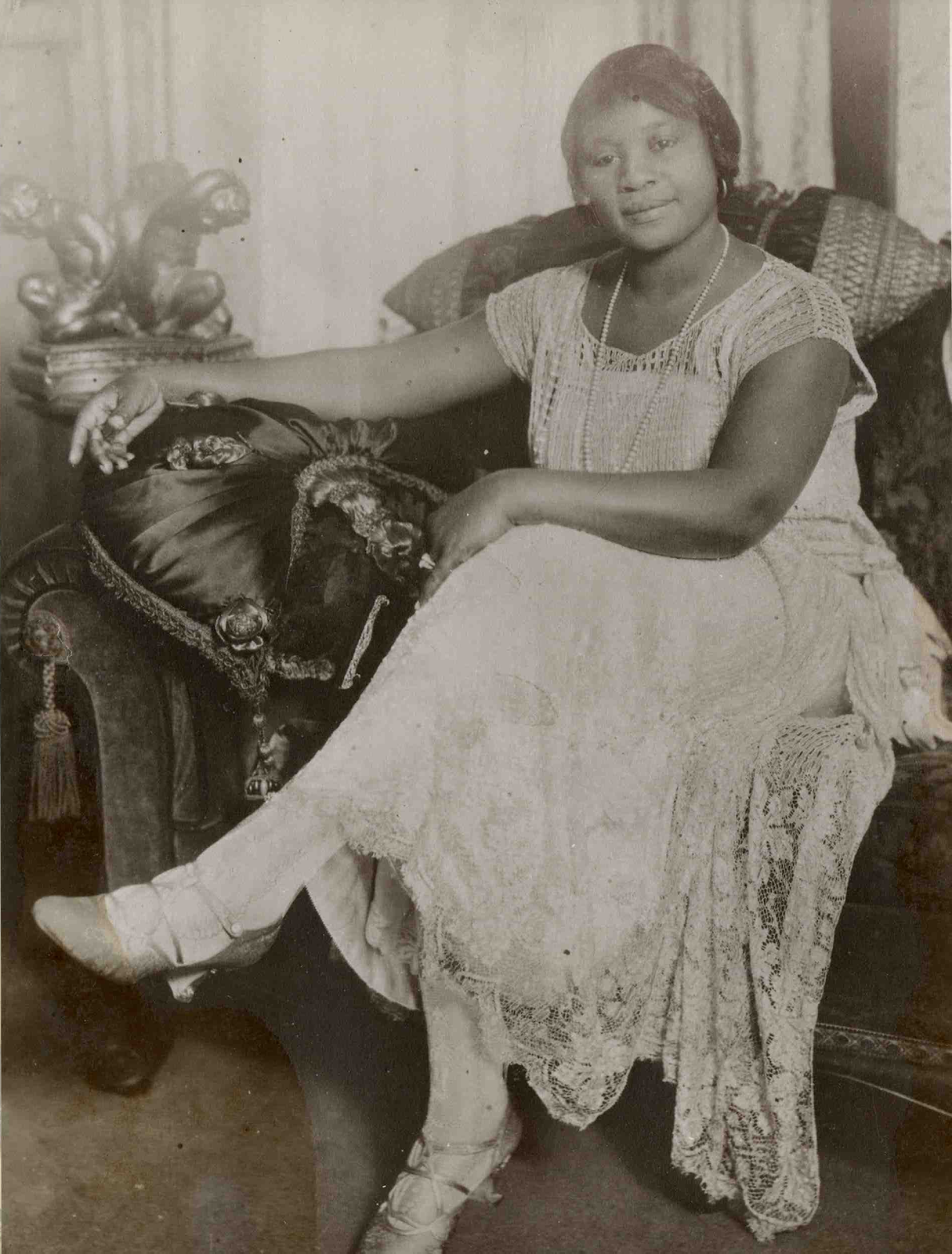
The ladies loved finer clothing, but being African American, they were not allowed to shop alongside white patrons in stores on Petticoat Lane. Many stores, including Emery, Bird, Thayer & Co., would close down and allow the Rector women to shop freely.
Sarah married her first husband, Kenneth Campbell, in 1920. He focused on real estate development and his car dealership at 18th and Vine. She had three boys. Sarah and her mother were known for their fancy Cadillacs, Lincolns and a Rolls Royce limo they raced around town. In fact, both women appeared to have a bit of a lead foot. Several speeding tickets were issued to both of them–especially to Sarah.
When she was pulled over in her shiny green and black Cadillac, Sarah would cockily turn to the officer and say, “Don’t you know who I am?!”
After the Stock Market Crash, a major dent was put into the finances of the Rector family. To be clear, Sarah still had quite a bit of money, but she didn’t have the ability to throw money around like she had once. Her siblings all took on jobs- her mother even for a time went back to working as a maid.
Most of the fancy parties that Sarah had where celebrities such as Duke Ellington would attend weren’t at the Rector mansion- they were at her home at 2600 Lockridge where she had purchased several homes on the block. She married her second husband, William Crawford, and lived a relatively quiet life. Mama Rose died in 1957, and Sarah passed in 1967 from a cerebral hemorrhage.
Ironically, her body was brought to C.K. Kerford Funeral Home. Her last stop in Kansas City was none other than the old Rector Mansion, now a funeral home. Her final resting place in the ground was back where the story begins–in Taft, in a peaceful parcel of land known as Blackjack Cemetery.
Remembering the Rector Legacy
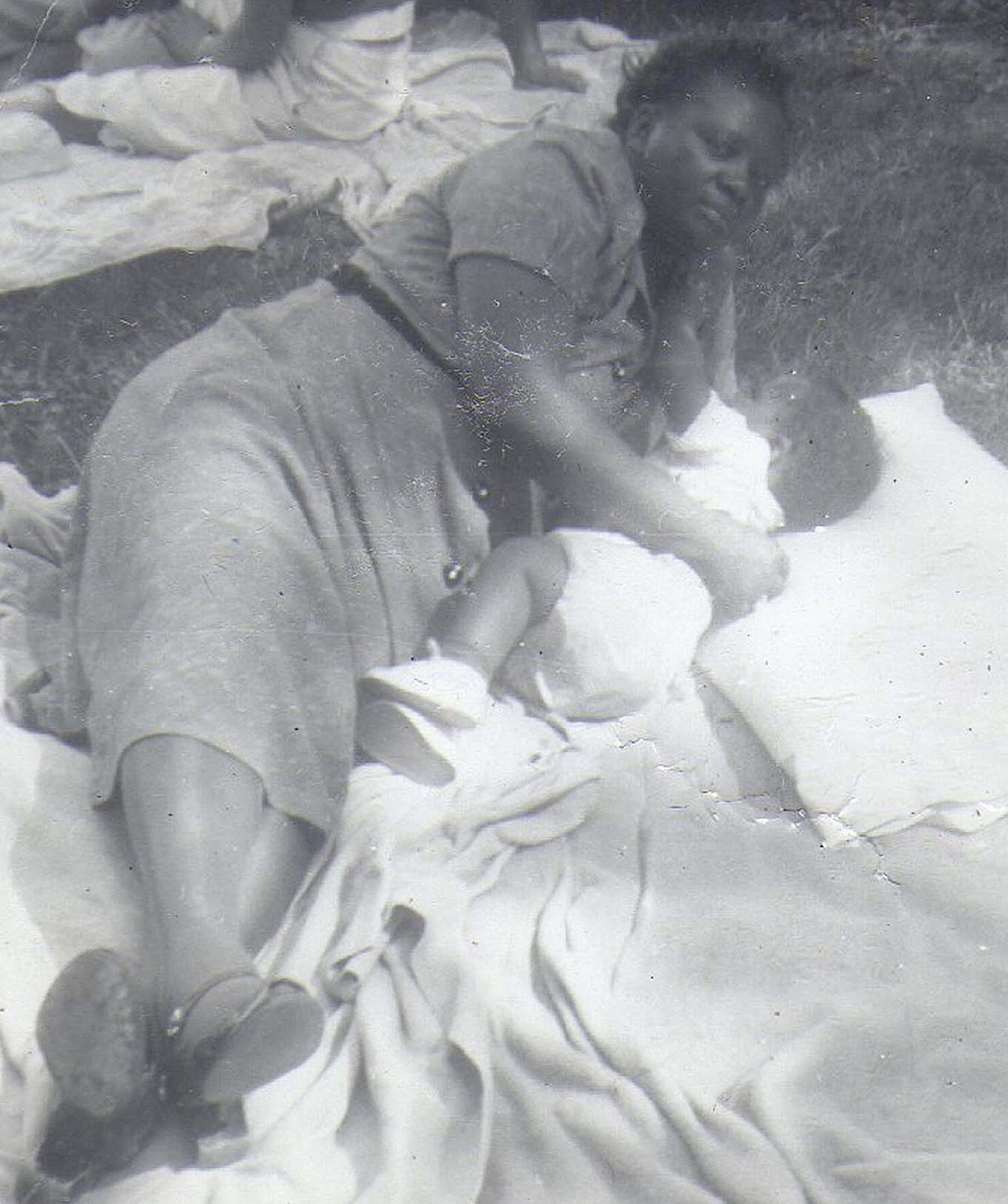
The family didn’t leave Kansas City as some like to report; five generations of Rector descendants still call this place home. They have sat back quietly as the rumors about their family recirculate every so often, as that false photo of Sarah is placed at the top of newspaper headlines and social media posts.
They drive by the abandoned Rector Mansion, boarded up and falling into disrepair, wishing that they could find a way to buy it back and bring it to its former glory.
“We would like to see the house restored and have it become a historic landmark and museum,” the Rector descendants told me around the kitchen table covered with photos, records and family papers. “We have things we would like to share with everyone.”
Today, their history is kept alive by relentless Rector women making sure their story from now on is told right.
Diane Euston writes a regular history column regarding the Kansas City area on her blog The New Santa Fe Trailer.